
Advanced bank statement verification in loan processing

December 4, 2023

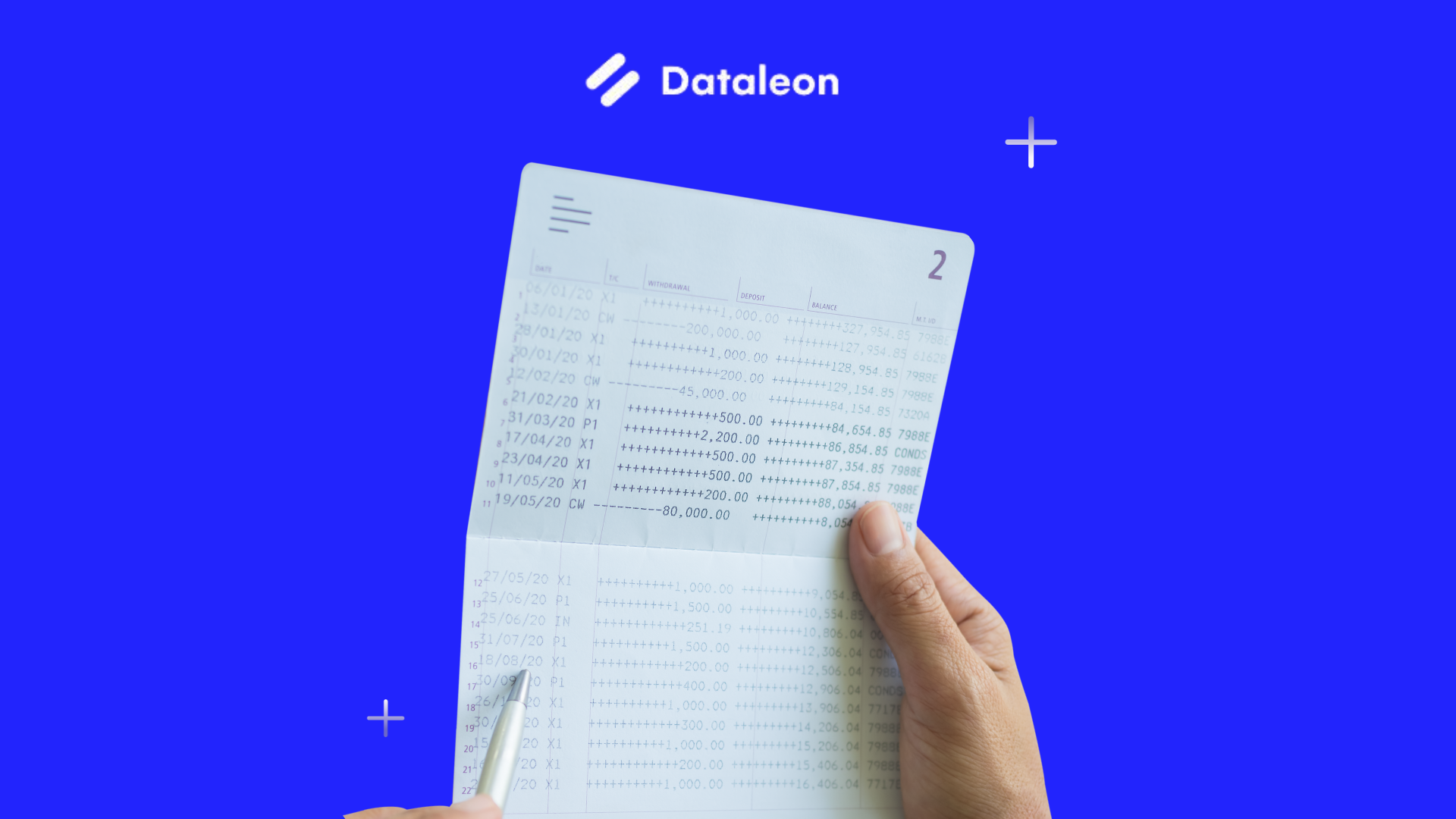
Understanding the importance of bank statements in the loan process is foundational. These statements are more than just records of financial transactions; they offer a comprehensive view of an individual's financial health. For loan companies, bank statements are the windows through which they assess an applicant's financial stability, spending habits, recurring income, and existing liabilities. This information is critical in determining loan eligibility, estimating risk levels, and deciding on loan terms.
Evolution of bank statement verification: From manual to digital
Traditionally, loan companies relied on manual processes for bank statement verification. Loan officers would meticulously review printed statements, verifying income sources, checking account balances, and noting any signs of financial distress, such as overdrafts or inconsistent income. However, this method was not only time-consuming but also prone to human error, leading to an increased risk of inaccurate assessments.
The digital transformation in the banking sector has revolutionized this process. Today, loan companies use sophisticated software to electronically verify bank statements. This technology offers a more efficient, accurate, and secure approach to analyzing financial data. Automated tools can quickly parse through digital statements, categorize transactions, identify consistent income patterns, and highlight potential red flags.
The role of AI and machine learning in enhancing accuracy
The integration of Artificial Intelligence (AI) and Machine Learning (ML) has taken bank statement verification to new heights. AI algorithms are adept at identifying complex patterns in financial data, discerning between regular income and one-off deposits, and detecting anomalies that may indicate financial fraud or instability. Machine Learning further refines this process by learning from each analysis, continuously improving the system's accuracy and reliability.
AI and ML not only expedite the verification process but also offer a level of depth and insight into a borrower's financial behavior that was previously unattainable. These technologies can predict future income stability and flag high-risk applicants by analyzing trends and patterns in their financial history.
Digital banking and real-time verification
The rise of digital banking has enabled real-time access to financial data, transforming the way loan companies verify bank statements. With the borrower's consent, lenders can securely connect to their online banking, retrieving and analyzing financial information almost instantaneously. This method not only speeds up the loan approval process but also enhances its security, reducing the risk of fraudulent statements.
Digital banking tools integrate various financial data sources, providing a holistic view of an applicant's financial health. They allow lenders to aggregate information from different bank accounts, credit cards, and other financial institutions, offering a complete and current picture of the borrower's financial status.
Request a demo for Dataleon's API Bank statement
Challenges and ethical considerations in digital verification
While the shift to digital verification of bank statements has brought efficiency and accuracy, it has not come without challenges. One of the primary concerns is the privacy and security of borrowers' financial data. Loan companies are tasked with ensuring robust data protection measures to prevent breaches and unauthorized access. This responsibility is heightened by regulations such as the General Data Protection Regulation (GDPR) in the European Union and various data protection laws worldwide.
Moreover, ethical considerations about data usage arise. The extent to which financial data is analyzed and the transparency of its usage are critical. Borrowers must be informed about how their data is used and given control over their privacy choices. Loan companies must navigate these ethical waters carefully to maintain trust and integrity in their relationships with customers.
The future of bank statement verification in the loan industry
Looking ahead, the future of bank statement verification in the loan industry is poised to be shaped by emerging technologies and changing regulatory landscapes. Blockchain technology, for instance, offers potential for creating immutable records of financial transactions, enhancing the security and trustworthiness of the verification process.
Additionally, the increasing use of open banking frameworks is set to revolutionize financial data sharing. Open banking allows customers to safely share their financial data with third-party providers, including loan companies, through APIs. This could streamline the loan application process even further, enabling more accurate and comprehensive financial assessments.
As these technologies and frameworks evolve, loan companies will likely see an even more efficient, secure, and customer-centric approach to bank statement verification. This evolution, however, must be balanced with stringent data security measures and adherence to evolving regulatory requirements.
Revolutionize your loan processing with Dataleon's AI-powered solution
Welcome to the future of loan processing with Dataleon's API Bank Statement. Designed to empower financial institutions, our innovative AI-driven solution guarantees lightning-fast analysis of client documents, delivering detailed reports in under a minute. Embrace the unparalleled efficiency and precision that Dataleon brings to your financing decisions.
- Speed up approvals: Leap ahead with our rapid processing technology, ensuring your clients don't have to wait.
- Enhanced accuracy: Benefit from our AI's meticulous attention to detail, minimizing errors and maximizing reliability.
- Secure and trustworthy: Rest assured with top-tier security measures embedded in our system, safeguarding sensitive financial data.
Request a demo for Dataleon's API Bank statement
Auteur




Questions fréquemment posées
Dataleon propose-t-il une assistance ?

Oui. Chaque client bénéficie d'un accompagnement dédié : support technique par e-mail et visioconférence, documentation complète et exemples de code pour intégrer nos API. Nos ingénieurs vous aident à cadrer vos parcours KYC et KYB, à réaliser l'intégration puis à passer en production sans interruption de service. Un interlocuteur unique reste ensuite disponible pour suivre vos volumes, ajuster vos règles de contrôle et répondre à vos questions métier comme techniques.
Mes fichiers sont-ils supprimés après traitement ?
Oui. Vos documents sont chiffrés en transit comme au repos, traités puis supprimés automatiquement à l'issue de la durée de conservation que vous définissez. Vous restez seul propriétaire des données transmises : elles ne sont ni revendues ni utilisées à d'autres fins que la réalisation de vos contrôles. Vous pouvez aussi déclencher la suppression immédiate d'un dossier depuis l'interface ou via l'API, et ne conserver que les résultats d'analyse nécessaires à vos obligations de conformité.
Peut-on intégrer Dataleon à nos outils via API ?
Oui. Dataleon se connecte à votre système d'information via une API REST documentée, des webhooks temps réel et des connecteurs vers vos outils existants : CRM, core banking, GED ou solutions de signature électronique. Les parcours de vérification, les règles de scoring, les seuils de risque et les workflows de validation sont entièrement paramétrables afin de coller à vos procédures internes. Nos équipes peuvent également développer des traitements sur mesure lorsque votre cas d'usage l'exige.
Puis-je tester Dataleon avant de m'engager ?
Oui. Vous bénéficiez d'un essai gratuit de 15 jours, sans engagement, pour vérifier vos propres pièces d'identité, justificatifs et documents d'entreprise et mesurer la qualité de l'extraction et des contrôles KYC/KYB. Pendant ces 15 jours, vous accédez à l'interface ainsi qu'à des clés d'API de test afin de valider votre intégration technique de bout en bout. Nous proposons également une démonstration personnalisée avec un expert pour construire ensemble le parcours adapté à votre activité.
Êtes-vous conforme au RGPD avec des serveurs en France ?
Oui. Dataleon est conforme au RGPD et l'ensemble des traitements ainsi que le stockage des données sont réalisés en France, sur l'infrastructure de Scaleway, hébergeur souverain français. Nous appliquons le chiffrement des données en transit et au repos, la minimisation des informations collectées, une gestion fine des droits d'accès et une traçabilité complète des opérations. Un accord de traitement des données (DPA) et notre documentation de sécurité vous sont fournis pour faciliter vos audits internes et réglementaires.
L'automatisation qui rend la conformité invisible.
Dataleon, le chaînon manquant entre votre conformité et votre croissance. KYC, KYB, LCB-FT, enfin réunis au même endroit.
La conformité automatisée, du document à la décision




© 2026 Dataleon. Tous droits réservés.

