
OCR signification and Its role in streamlining workflows for businesses and organizations

March 27, 2023

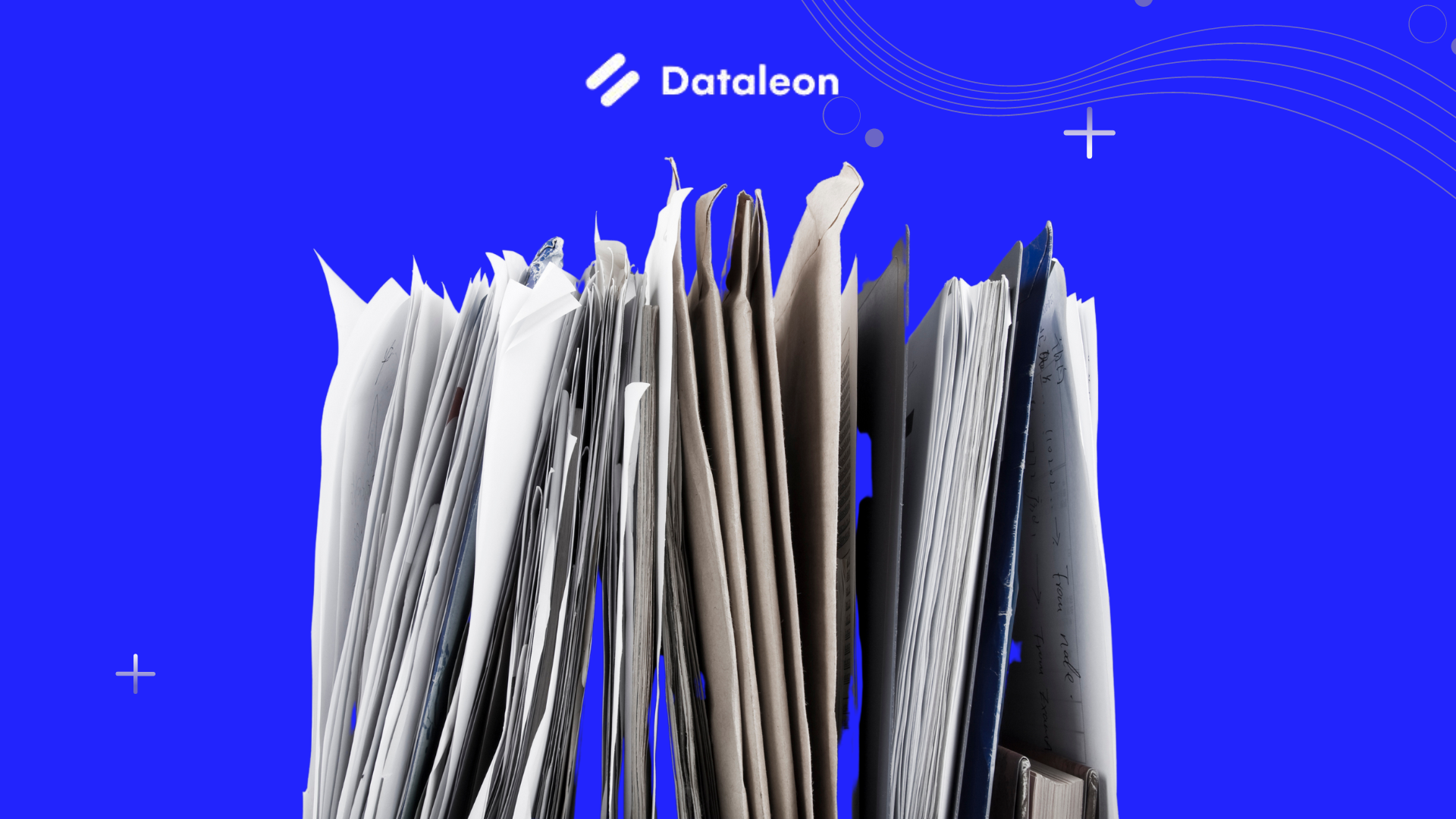
Unlock the potential of OCR : discover precisely what it is and fully grasp how it intelligently operates. Explore its transformative capabilities today.
What is OCR?
OCR stands for Optical Character Recognition, a technology that converts scanned documents or images containing text into machine-encoded text. This process allows computers to read and understand the text, making it searchable and editable. OCR is widely used in many industries, including banking, healthcare, and government, among others.
OCR technology can recognize various languages, including English, Spanish, Chinese, and many others. OCR can recognize printed or handwritten text and even text that is stylized or distorted.
OCR Signification
The signification of OCR is essential in many industries. OCR technology has revolutionized the way we handle and process large volumes of data. OCR technology allows us to quickly scan and digitize paper documents, eliminating the need for manual data entry. This process saves time and reduces the risk of errors that can occur with manual data entry.
In the banking industry, OCR is used to process checks and other financial documents quickly. OCR can recognize handwritten numbers and text, making it possible to process checks and other financial documents more efficiently.
In the healthcare industry, OCR is used to digitize patient records, making them easily accessible to healthcare providers. OCR technology allows healthcare providers to quickly search and retrieve patient records, improving patient care and safety.
OCR is also used in the government to digitize records and documents, making them accessible to the public. OCR technology makes it easier for citizens to access government records and documents, promoting transparency and accountability.
How Does OCR Work?
OCR technology uses advanced algorithms to analyze and recognize text in scanned documents or images. The process involves several steps, including image pre-processing, text detection, character segmentation, and recognition.
Image pre-processing involves cleaning up the scanned image and enhancing its quality to make it easier for OCR algorithms to recognize the text. Text detection involves locating and extracting text from the image, while character segmentation involves separating the individual characters from the text.
The final step is character recognition, where OCR algorithms analyze the individual characters and compare them to a database of known characters. The OCR software then selects the best match for each character, resulting in a machine-encoded text version of the original document.
OCR Advantages and Limitations
OCR technology offers many advantages, including faster document processing times, improved accuracy, and reduced labor costs. OCR can also help organizations to become more environmentally friendly by reducing paper waste.
However, OCR is not without its limitations. OCR algorithms can struggle with poorly scanned or low-quality documents, resulting in inaccurate text recognition. OCR is also not foolproof and may miss certain text, particularly if it is handwritten or stylized.
OCR Best Practices
To get the most out of OCR technology, it is essential to follow some best practices. First, ensure that your documents are of high quality and properly scanned. This will help to improve OCR accuracy and reduce errors. Second, choose an OCR software that is compatible with your industry and document types. Finally, test your OCR software regularly and fine-tune it to improve its accuracy.
Conclusion
In conclusion, OCR is a powerful technology that has revolutionized the way we handle and process data. OCR signification is essential in many industries, allowing us to process documents quickly and accurately, improving efficiency and reducing the risk of errors. With its advanced algorithms and powerful text recognition capabilities, OCR technology is a valuable tool for any business or organization looking to digitize their documents and improve data processing efficiency.
Auteur
michel




Questions fréquemment posées
Dataleon propose-t-il une assistance ?

Oui. Chaque client bénéficie d'un accompagnement dédié : support technique par e-mail et visioconférence, documentation complète et exemples de code pour intégrer nos API. Nos ingénieurs vous aident à cadrer vos parcours KYC et KYB, à réaliser l'intégration puis à passer en production sans interruption de service. Un interlocuteur unique reste ensuite disponible pour suivre vos volumes, ajuster vos règles de contrôle et répondre à vos questions métier comme techniques.
Mes fichiers sont-ils supprimés après traitement ?
Oui. Vos documents sont chiffrés en transit comme au repos, traités puis supprimés automatiquement à l'issue de la durée de conservation que vous définissez. Vous restez seul propriétaire des données transmises : elles ne sont ni revendues ni utilisées à d'autres fins que la réalisation de vos contrôles. Vous pouvez aussi déclencher la suppression immédiate d'un dossier depuis l'interface ou via l'API, et ne conserver que les résultats d'analyse nécessaires à vos obligations de conformité.
Peut-on intégrer Dataleon à nos outils via API ?
Oui. Dataleon se connecte à votre système d'information via une API REST documentée, des webhooks temps réel et des connecteurs vers vos outils existants : CRM, core banking, GED ou solutions de signature électronique. Les parcours de vérification, les règles de scoring, les seuils de risque et les workflows de validation sont entièrement paramétrables afin de coller à vos procédures internes. Nos équipes peuvent également développer des traitements sur mesure lorsque votre cas d'usage l'exige.
Puis-je tester Dataleon avant de m'engager ?
Oui. Vous bénéficiez d'un essai gratuit de 15 jours, sans engagement, pour vérifier vos propres pièces d'identité, justificatifs et documents d'entreprise et mesurer la qualité de l'extraction et des contrôles KYC/KYB. Pendant ces 15 jours, vous accédez à l'interface ainsi qu'à des clés d'API de test afin de valider votre intégration technique de bout en bout. Nous proposons également une démonstration personnalisée avec un expert pour construire ensemble le parcours adapté à votre activité.
Êtes-vous conforme au RGPD avec des serveurs en France ?
Oui. Dataleon est conforme au RGPD et l'ensemble des traitements ainsi que le stockage des données sont réalisés en France, sur l'infrastructure de Scaleway, hébergeur souverain français. Nous appliquons le chiffrement des données en transit et au repos, la minimisation des informations collectées, une gestion fine des droits d'accès et une traçabilité complète des opérations. Un accord de traitement des données (DPA) et notre documentation de sécurité vous sont fournis pour faciliter vos audits internes et réglementaires.
L'automatisation qui rend la conformité invisible.
Dataleon, le chaînon manquant entre votre conformité et votre croissance. KYC, KYB, LCB-FT, enfin réunis au même endroit.
La conformité automatisée, du document à la décision



© 2026 Dataleon. Tous droits réservés.


