
How to improve invoice processing with automation tools

January 3, 2024


In the ever-evolving landscape of modern business operations, mastering the art of invoice processing has become pivotal. It's not just about paying bills; it's a strategic function that fortifies vendor relationships, streamlines financial management, and drives efficiency. This article delves into the intricacies of invoice processing, unveiling its significance and the transformative impact of automation in this domain.
What is invoice processing?
Invoice processing is a critical financial operation involving the handling, verification, and payment of invoices received from vendors. It's the lifeblood of the accounts payable (AP) process, ensuring that all payments for goods and services are accurate, timely, and in compliance with contractual terms. This operation is essential for maintaining healthy supplier relationships and a steady supply chain, fundamental to business success.
The evolution of invoice processing
Historically, invoice processing was a manual and time-intensive task. Each invoice would pass through numerous hands for verification, approval, and payment, increasing the risk of errors and delays. However, the advent of digital transformation has revolutionized this process, introducing automation and efficiency.
A closer look at the invoice processing workflow
The workflow typically involves several key steps:
- Reception of invoice: Upon completion of a transaction, a vendor issues an invoice detailing the services or products provided, the amount due, and payment terms.
- Invoice verification: The AP team conducts a detailed review of the invoice, ensuring its accuracy and matching it with corresponding purchase orders and delivery receipts.
- Approval workflow: The invoice is routed through a predefined approval process, ensuring all expenditures align with the company's financial policies.
- Payment processing: Once approved, the payment is processed using various methods like electronic funds transfer, credit cards, or digital payment systems.
- Recording and reconciliation: The final step involves recording the payment in the company's financial ledger and reconciling it with the general accounts.
Transforming invoice processing with automation
Automation in invoice processing is a game-changer. Here are its key benefits:
- Enhanced accuracy: Automation reduces human error, ensuring data precision in invoice processing.
- Increased efficiency: Automated systems streamline the entire process, from data entry to payment, saving valuable time and resources.
- Improved vendor relationships: Timely and accurate payments foster trust and reliability with suppliers.
- Real-time analytics: Automated systems offer valuable insights into financial operations, aiding strategic decision-making.
- Scalability: As the business grows, automated invoice processing easily adapts to the increasing volume of transactions.
Leveraging Dataleon's OCR invoice API for enhanced invoice processing
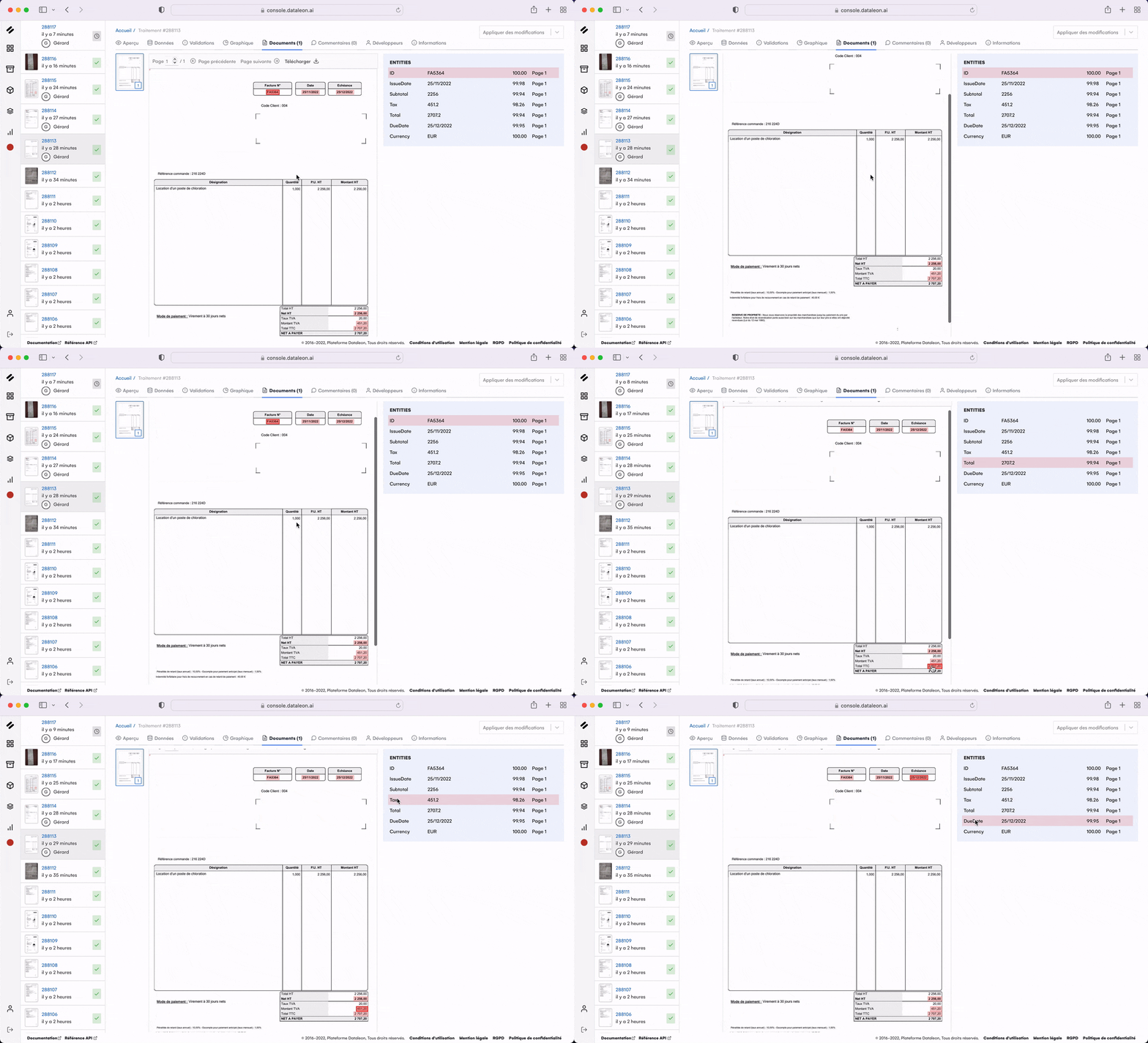
In the realm of optimizing invoice processing, Dataleon's OCR (Optical Character Recognition) Invoice API stands as a beacon of innovation and efficiency. This cutting-edge tool redefines the approach to handling invoices by automating the extraction and digitization of data from physical and digital invoices.
With Dataleon's OCR technology, businesses can effortlessly transform cumbersome, error-prone manual entry into a streamlined, accurate process. This API not only accelerates the invoice processing cycle but also significantly reduces processing costs, minimizes human error, and enhances data accuracy.
By integrating Dataleon's solution, companies can unlock new levels of productivity, allowing their teams to focus on strategic tasks rather than tedious data entry. This is more than just a tool; it's a strategic asset in the digital transformation journey of any forward-thinking business looking to thrive in the competitive market landscape.
Request a demo for Dataleon
Auteur




Questions fréquemment posées
Dataleon propose-t-il une assistance ?

Oui. Chaque client bénéficie d'un accompagnement dédié : support technique par e-mail et visioconférence, documentation complète et exemples de code pour intégrer nos API. Nos ingénieurs vous aident à cadrer vos parcours KYC et KYB, à réaliser l'intégration puis à passer en production sans interruption de service. Un interlocuteur unique reste ensuite disponible pour suivre vos volumes, ajuster vos règles de contrôle et répondre à vos questions métier comme techniques.
Mes fichiers sont-ils supprimés après traitement ?
Oui. Vos documents sont chiffrés en transit comme au repos, traités puis supprimés automatiquement à l'issue de la durée de conservation que vous définissez. Vous restez seul propriétaire des données transmises : elles ne sont ni revendues ni utilisées à d'autres fins que la réalisation de vos contrôles. Vous pouvez aussi déclencher la suppression immédiate d'un dossier depuis l'interface ou via l'API, et ne conserver que les résultats d'analyse nécessaires à vos obligations de conformité.
Peut-on intégrer Dataleon à nos outils via API ?
Oui. Dataleon se connecte à votre système d'information via une API REST documentée, des webhooks temps réel et des connecteurs vers vos outils existants : CRM, core banking, GED ou solutions de signature électronique. Les parcours de vérification, les règles de scoring, les seuils de risque et les workflows de validation sont entièrement paramétrables afin de coller à vos procédures internes. Nos équipes peuvent également développer des traitements sur mesure lorsque votre cas d'usage l'exige.
Puis-je tester Dataleon avant de m'engager ?
Oui. Vous bénéficiez d'un essai gratuit de 15 jours, sans engagement, pour vérifier vos propres pièces d'identité, justificatifs et documents d'entreprise et mesurer la qualité de l'extraction et des contrôles KYC/KYB. Pendant ces 15 jours, vous accédez à l'interface ainsi qu'à des clés d'API de test afin de valider votre intégration technique de bout en bout. Nous proposons également une démonstration personnalisée avec un expert pour construire ensemble le parcours adapté à votre activité.
Êtes-vous conforme au RGPD avec des serveurs en France ?
Oui. Dataleon est conforme au RGPD et l'ensemble des traitements ainsi que le stockage des données sont réalisés en France, sur l'infrastructure de Scaleway, hébergeur souverain français. Nous appliquons le chiffrement des données en transit et au repos, la minimisation des informations collectées, une gestion fine des droits d'accès et une traçabilité complète des opérations. Un accord de traitement des données (DPA) et notre documentation de sécurité vous sont fournis pour faciliter vos audits internes et réglementaires.
L'automatisation qui rend la conformité invisible.
Dataleon, le chaînon manquant entre votre conformité et votre croissance. KYC, KYB, LCB-FT, enfin réunis au même endroit.
La conformité automatisée, du document à la décision




© 2026 Dataleon. Tous droits réservés.

